
Live Blackjack at UK Online Casinos: How It Works
 Available in GB

A real dealer handles physical cards on camera while the digital interface lets remote players follow the hand and take part.
Table of Contents
- How Live Blackjack Works on Screen
- The Aim of a Blackjack Hand
- Winning Claims, House Edge and Staking Systems
- Playing Through a Live Interface
- Dealer Interaction, Chat and Table Options
- Side Bets and Other Live Blackjack Options
- Checking Blackjack Sites and Their UK Licence
- Comparing Blackjack Tables on Their Terms
- Blackjack Bonuses: Wagering Weight and Eligibility
- Slots
How Live Blackjack Works on Screen
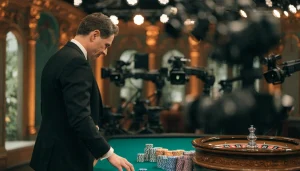
Live blackjack online in the UK combines a streamed casino table with a digital viewing and betting window. The cards are physical, and a human dealer handles them in real time. That is the defining difference from a version in which the game is represented entirely through software: the action shown comes from a dealer and cards at a table, rather than an animated account of a hand.
The camera feed gives the session a visible source. Cards are dealt from a standard deck, and their movement across the table can be watched as it happens. The dealer is not a graphic or a voice attached to a simulated table; the dealer is present in the studio and appears on screen while the game proceeds. This makes live blackjack recognisably different from digital blackjack, even when both are accessed through the same casino account.
The screen therefore has two roles. It carries the live view of the table and provides the means to take part remotely. The player is not physically seated beside the dealer, but can follow the dealer’s actions as the cards are handled and dealt. The arrangement preserves the central visual features of a casino table while moving participation to an online setting.
When choosing a UK casino for live blackjack, it helps to check practical details alongside the game itself. This list notes the payout information available for each operator.
1. Zombillion
Payout speed: 1-3 business days Zombillion lists a payout speed of 1–3 business days.
2. SlotoSport
Payout speed: 1-3 business days SlotoSport lists a payout speed of 1–3 business days.
3. SpinFormula
Payout speed: 1-3 business days SpinFormula lists a payout speed of 1–3 business days.
4. EvoSpin
Payout speed: 1-3 business days EvoSpin lists a payout speed of 1–3 business days.
5. NightLuck
Payout speed: 1-3 business days NightLuck lists a payout speed of 1–3 business days.
6. BeOnBet
Payout speed: 1-3 business days BeOnBet lists a payout speed of 1–3 business days.
7. WinBeast
Payout speed: 1-3 business days WinBeast lists a payout speed of 1–3 business days.
8. Revery Play
Payout speed: 1-3 business days Revery Play lists a payout speed of 1–3 business days.
9. Chanze
Payout speed: 1-3 business days Chanze lists a payout speed of 1–3 business days.
10. NightWin
Payout speed: 1-3 business days NightWin lists a payout speed of 1–3 business days.
That distinction matters when comparing blackjack casinos. A digital game can present cards and outcomes in a software interface; a live table shows physical cards being dealt by a person. The live format does not change blackjack into a different game, but it changes how the game is delivered and observed. The dealer’s presence is part of the session, not merely a visual theme.
The stream also makes the experience dependent on seeing the action clearly as it unfolds. A live table is not simply a collection of card images displayed after each stage: it is a real-time view of a dealer working with physical cards. The result is a more direct link between what happens at the table and what appears on screen, while the online interface remains the route through which remote players participate.
For a UK Blackjack casino, the label “live” should therefore describe the actual format: real-time studio footage, a human dealer and physical cards. A themed digital game may resemble a casino table, but appearance alone does not make it live blackjack. The practical distinction is the presence of a dealer dealing cards in the streamed game.
Live play is entertainment, not a method of earning income or gambling advice. A session still involves money, so its budget should be set in advance and kept separate from essential spending. The visual immediacy of a live table changes the presentation; it does not change that basic financial boundary.
Live Casino Lightning Roulette UK: How It Works · Penny Slot Machines in the UK: Stakes and Rules
The Aim of a Blackjack Hand
The objective in blackjack is to finish with a hand that beats the dealer’s while keeping its total at 21 points or less. The number 21 is therefore a ceiling, not a target that must be reached in every hand. A lower total can still meet the aim if it is higher than the dealer’s and neither hand exceeds the limit.
That makes blackjack a comparison between two hands, rather than a contest to reach a fixed score regardless of the dealer’s result. The player’s total matters, but it is not assessed in isolation: the stated aim is to beat the dealer. A total below 21 does not, by itself, establish that the hand has succeeded.
The limit also matters. Going over 21 conflicts with the basic objective, even if the hand had been close to the target. In practical terms, the aim has two parts: stay within the permitted total and finish ahead of the dealer. A hand that satisfies only one part has not fulfilled the whole objective as described.
This is the core of casino blackjack rules: assess the hand total against the 21-point ceiling, then compare it with the dealer’s hand. The same principle applies when considering blackjack rules at a UK casino; the basic aim is not a different goal simply because the game is offered in a casino setting. Table-specific details may affect how a particular game is presented, but the central objective remains the comparison with the dealer under the limit.
It helps to keep “reaching 21” separate from “winning the hand”. The first describes a possible total; the second depends on whether the player beats the dealer without going over. Treating 21 as an obligatory score would misstate the aim. So would treating any total below 21 as sufficient without considering the dealer’s hand.
The Main Objective
Beat the dealer with a hand total no higher than 21.
The objective can be stated plainly: beat the dealer, and do so with a total no higher than 21. That definition is enough to understand what a blackjack hand is trying to achieve. It does not, on its own, explain every decision or table condition; those belong to the rules of the particular game. But it provides the test against which the result of a hand is understood, without confusing a numerical target with the actual outcome.
Winning Claims, House Edge and Staking Systems
Knowing how a blackjack hand is settled does not turn the game into a reliable source of income. The result of an individual hand can favour the player, but blackjack retains a house edge: over continued play, the rules give the casino a mathematical advantage. That edge is not a promise about what happens next. A player can win a session, lose a session, or see results move sharply in either direction.
This distinction matters when considering claims about how to win casino blackjack. A method may organise decisions or stakes, but it cannot remove the house edge. A winning run is an outcome, not proof that a system has changed the underlying terms. Likewise, a losing run does not mean that a win is now due. Each new hand is not required to repair the previous result.
Martingale is a staking system built around increasing the next stake after a loss, with the intention of recovering earlier losses when a win arrives. Its appeal is easy to see: the plan treats a single eventual win as the point at which the sequence becomes profitable. The arithmetic, however, depends on that win arriving before the player runs out of funds or reaches a table limit. If losses continue, the required stake grows, while the earlier losses remain part of the total already at risk.
Progressive slots online in the UK: jackpot guide · Deal or No Deal Casino UK: Rules and Bonus Play
That is the central weakness, not a minor qualification. A staking sequence can change the size and timing of potential gains and losses; it cannot change the game’s advantage. A win after several losses may recover the sequence’s accumulated deficit, but it does not make the system safe. If the sequence ends before recovery, the losses stand. The more aggressively stakes are raised, the more quickly a run of unfavourable results can make the plan impractical.
Other staking systems face the same basic distinction between money management and game advantage. Dividing a balance into planned stakes, increasing after a win, or holding a stake steady may alter how long a session lasts and how much is exposed at a particular point. None guarantees a profit. A strategy that sounds orderly is still operating inside a game with a house edge.
For anyone asking how to win blackjack online, the honest answer is that no staking system can guarantee a winning outcome. A session plan can set boundaries, but it cannot promise that the balance will finish higher. Claims that a system makes losses temporary, or that a particular sequence must eventually pay, confuse a possible result with a dependable one.
The practical calculation is therefore simple: decide in advance what amount is affordable to lose, and do not increase it to chase a recovery. Stop when that limit is reached, whether the session is ahead or behind. The game remains entertainment, not gambling advice; its house edge and the risk of loss do not disappear because the stakes follow a formula.
Financial Risk
No staking system can remove the house edge or guarantee a winning outcome; never increase stakes to chase a recovery.
Playing Through a Live Interface
A live blackjack session combines a studio broadcast with a separate betting interface. The dealer’s game is streamed in real time, while each player uses on-screen controls to place bets. The screen therefore carries two jobs: showing the live table and providing the means to take part. A delay or interruption in the stream can make it harder to follow the session, even if the betting controls remain visible.
This format differs from a digital blackjack game, where the action is generated by software and can move more quickly. At a live table, the pace depends on the broadcast and the dealer’s handling of the game. There is less scope to move through hands at speed, so a session may take longer than the equivalent time spent on a digital version. That difference affects the number of hands encountered during a session; it does not change the basic terms of play.
The interface also makes the table’s operating conditions part of the experience. Bets are entered on screen rather than placed physically, and the live feed must remain stable enough to follow what is happening. A reliable internet connection is therefore a practical requirement, not an optional convenience. If the picture freezes, becomes choppy or falls behind, the stream may no longer provide a clear view of the current action.
Live games also have higher minimum bets than digital versions. That sets a different entry point for real-money play: the relevant comparison is not only how a table looks, but whether its starting level suits the intended session. Faster software play can be available at lower minimums, while the live format trades some speed for a real-time studio presentation.
Live Dream Catcher Casino UK: How It Works
The on-screen layout may make the game feel straightforward to operate, but the pace still leaves time between actions. That interval belongs to the format rather than to a promise of improved results. A session can be longer without producing more favourable outcomes, and a smooth stream does not alter the financial terms of the game.
Free-play displays, where offered, should be treated separately from real-money play. They do not provide real payouts, and their presence does not establish that the same table conditions apply when money is involved. For a practical comparison, the key points are the live feed, connection stability, table pace and minimum bet—not the appearance of the interface alone.
Dealer Interaction, Chat and Table Options
A live dealer blackjack table adds a social layer to the game: the dealer appears on a real-time stream, while the betting interface remains the route for placing wagers. Chat may allow communication with the dealer and other players. It does not turn the session into a private conversation; several people may be at the same table, each following the hand at their own pace.
Chat is best understood as an optional table feature, not part of the game’s essential operation. A player can use it to acknowledge the dealer or exchange brief comments with others, or leave it unused and concentrate on the screen. The presence of a human dealer gives the session a more direct, casino-like character than a digital game, but the social element does not alter the terms of play. A message in chat has no bearing on the cards or on how a wager is settled.
Social features like chat and dealer interaction are optional additions that do not alter the game’s terms or the settlement of wagers.
That distinction matters when comparing an online live dealer blackjack casino with a digital blackjack game. The live format makes the dealer visible and permits interaction, while the table’s available functions still depend on the particular game. Chat, side bets and Bet Behind may be offered, but they should not be assumed to appear at every table. Their availability is a feature to confirm in the table interface, not a universal part of live blackjack.
Bet Behind lets a participant place a wager in connection with another player’s seat or hand, where the table offers that option. It provides a way to take part without occupying the active player’s position. The feature does not make the underlying hand more favourable, and the decision remains a financial one: a wager can lose just as any other wager can. Table rules determine how the option is presented and settled, so its label alone is not a substitute for reading the displayed conditions.
Side bets are another possible addition. They are separate choices alongside the main game, rather than a requirement for joining the table. Their presence can make the interface look busier and add another decision before a hand begins. The amount committed to an optional bet should therefore be treated as part of the session’s total spend, not as a free extra attached to the main wager. The table’s rules and paytable need to be reviewed before any such option is used.
The practical value of these features depends on the kind of session being sought. Chat may suit someone who wants a more social atmosphere; a quieter session can leave it untouched. Bet Behind may be relevant when the table makes that route available, while side bets may be declined without changing the basic nature of the game. None of these options is evidence of a better return. They change how a player participates, not the financial certainty of the result.
Classic Slots Online in the UK: How They Work
A live dealer blackjack casino UK experience is therefore partly a matter of table choice: some tables may offer more ways to interact, while others may keep the screen focused on the hand and betting controls. The dealer’s presence is real, but conversation and optional features remain secondary to the posted rules. Setting a budget before play and keeping to it places a clear ceiling on the session; neither social momentum nor a run of results is a reason to raise it.
Live blackjack is entertainment, not financial advice. Chat, side bets and Bet Behind can shape the format of a session, but they do not change the need to understand the table conditions before staking money.
Side Bets and Other Live Blackjack Options
A live blackjack table may offer side bets alongside the main hand, as well as a Bet Behind option. These are separate table features, not evidence that a game has better returns. Their availability and terms depend on the individual table, so the displayed rules and paytable matter before any stake is placed.
A side bet is an optional wager offered in addition to the main blackjack bet. Its presence changes the amount committed to the round, but it does not change the purpose of the main hand. The table’s rules should make clear how the side bet is settled and what combinations qualify for a return. Without those details, its price cannot be assessed: a payout label alone does not explain how often a qualifying result occurs or what the wager costs over time.
Side bets are additional costs that increase the total amount at risk per round and should be assessed separately from the main stake.
For that reason, side bets should be treated as a separate decision rather than bundled into the main stake by habit. The relevant figure is the total amount at risk across the round, including any extra wager. A side bet that is optional remains an additional cost if selected; it does not become part of the main bet merely because the interface presents both at once. If the rules or paytable are unclear, there is no sound basis for estimating its value.
Bet Behind is another possible table option. It allows a bet to be placed behind another player’s hand, where the feature is available. This is distinct from taking a separate side bet: the option concerns participation in another player’s hand rather than an additional wager on a separate event. The table’s own terms determine how the feature works, so those terms should be read before it is used.
Neither option removes the need to set a session budget. A sequence of optional wagers can increase the total stake without changing the underlying limits set for play. Keeping the main bet, any side bet and any Bet Behind stake distinct in the account of the session makes the cost easier to track. The interface may group options close together; the arithmetic does not.
Live blackjack options are not uniform across tables. One table may show a feature that another does not, and a label is not a substitute for its conditions. Before a round begins, the displayed rules and paytable provide the relevant basis for deciding whether an option is understood and affordable. If its terms cannot be identified, leaving it unused is the only calculation that does not depend on an assumption.
Jackpot Mobile Casino UK: Pool Rules and Odds
These features add choices to a live blackjack session, not a reliable route to improved results. Side bets and Bet Behind should therefore be assessed on their stated conditions and on the additional amount they place at risk. The content is for entertainment purposes only and is not gambling advice.
Checking Blackjack Sites and Their UK Licence
A blackjack site’s appearance, table range and payment options do not establish whether it can legally offer real-money play in the UK. The relevant threshold is its UK Gambling Commission licence. Live dealer casinos are legal in the UK when they hold the required licence; an overseas address or a licence from another jurisdiction does not replace UKGC authorisation for serving the British market.
That makes licensing an eligibility check, not a quality score. A site can meet the legal requirement without being the best fit for a particular session, while an attractive presentation cannot compensate for the absence of the required UK licence. The two questions should remain separate: whether the operator is authorised to serve the market, and whether its tables and conditions suit the intended use.
Identify the operator, not just the brand
Blackjack casino sites may present a consumer-facing brand that differs from the legal name of the company operating the service. The company name in the site’s terms or other legal information is therefore more useful for checking than the brand alone. The record should correspond to the operator behind the service, rather than merely mentioning a similar trading name.
Do
- Check the operator’s legal name in the terms
- Verify the licence via the UK Gambling Commission
Don’t
- Rely on the consumer-facing brand name
- Assume a polished homepage proves authorisation
The UK Gambling Commission’s public information is the relevant place to confirm whether an operator holds a UK licence. A licence issued by an offshore regulator is not the same as a UKGC licence. If the operator’s identity is unclear, or the available information does not allow the site and its operator to be matched confidently, the eligibility question remains unresolved. A polished homepage is not evidence of authorisation.
This distinction matters when comparing blackjack casino sites in the UK. A list of tables or a familiar brand name can make two sites look equally established, but neither tells whether the company serving British customers holds the required permission. The licence check is about the legal operator and its authority, not the number of games displayed.
Licence status is a threshold, not a recommendation
A UKGC licence answers a specific question: whether the operator is authorised within the UK regulatory system to provide gambling services covered by that licence. It does not amount to an endorsement of every feature, promotion or table offered by the site. Nor does it establish that a particular blackjack table is suitable for every player.
The Gambling Act 2005 governs gambling in England, Wales and Scotland. Remote gambling operators selling into the British market must hold the relevant Gambling Commission licence, regardless of where the company is based. Offshore casinos that do not hold a UKGC licence operate outside that regulatory system. For a site presented as serving UK customers, an overseas company address does not remove the licensing requirement.
French Roulette Online Casinos in the UK
The legal framework is not a reason to treat every licensed site as interchangeable. Once eligibility is established, other comparisons can concern the practical conditions of play. Those are separate considerations and should not be used to blur the initial legal check. Conversely, a favourable table description cannot make an unlicensed operator eligible to serve the British market.
What the check does—and does not—settle
A licence check does not determine whether a site offers the right table format, how its interface works or whether a session fits a chosen budget. Those matters belong to the evaluation of the service itself. The licence addresses regulatory eligibility; it is not a prediction of results or a measure of value.
The same distinction applies to claims about being among the best or top blackjack sites. Such labels are not a substitute for checking the operator’s authorisation, and a ranking cannot make an unlicensed site lawful. A useful comparison begins by excluding any service whose UK eligibility cannot be established, then considers the remaining sites on their actual terms. No single label resolves both questions.
Online gambling in the UK is legal for adults aged eighteen and over when the operator holds a UK Gambling Commission licence. That condition concerns both age and operator status; meeting one does not remove the other. The site must verify a customer’s age before allowing a deposit into a gambling account.
For blackjack online casino sites, the practical conclusion is narrow but important: first establish that the operator serving the market holds the relevant UKGC licence. Then assess the separate features and conditions of its tables. This is a legal threshold, not a promise of winning, a ranking of providers or an assurance that every offer is suitable.
This material is for entertainment purposes only and is not gambling advice.
UK Licence Verification
- Identify the legal operator name
- Check for a valid UK Gambling Commission licence
- Confirm the operator is authorised to serve the UK market
Comparing Blackjack Tables on Their Terms
A blackjack table is not comparable with another solely because both carry the same game name. The useful differences are the conditions under which a session can be played: the entry stake, the speed of dealing and the reliability of the connection. These affect how long play can continue and how much time is spent waiting between decisions. A comparison based on those terms is more informative than a label such as “best” without a stated measure.
The minimum bet is a direct constraint. A table’s starting stake determines whether its terms fit a planned session budget; a low figure does not make the game more favourable, and a higher one does not establish better quality. It changes the cost of entering each hand. Where several tables are available, the relevant comparison is the amount required to join, alongside any other stated table conditions. If the displayed minimum is above the amount allocated to the session, that table is not a practical match, regardless of its presentation.
A specialist review has described many live roulette and baccarat tables as opening at 20p, while setting higher starting limits as a common feature of blackjack tables. That is a reported comparison, not a fixed price schedule for every operator or a guarantee about what a table will show at the time of play. Limits can differ between tables and can change, so a published figure should be treated as a point of comparison rather than a permanent rule. The practical check is the minimum shown for the specific blackjack table, not an assumption drawn from another casino game.
Progressive jackpot slots: UK rules and how they work
That distinction matters when comparing casino options across different game types. A low entry point at a live roulette or baccarat table does not imply that a blackjack table at the same site will accept the same stake. Nor does a high blackjack minimum establish that all tables at that operator have matching terms. Each table has to be assessed on its own displayed conditions. Comparing the site’s general reputation or its headline game selection cannot replace that check.
Pace and session length
Live blackjack runs more slowly than a digital version. The difference affects the rhythm of a session: fewer hands can be completed in the same period, and time between decisions becomes part of the experience. A player comparing formats should therefore consider pace alongside the stake. A table with a suitable minimum may still be a poor fit for someone expecting the quicker cycle of digital play.
Slower dealing is not a defect in itself; it is part of the live format. But it changes how a session uses time and bankroll. A budget that is planned around a fast sequence of digital hands does not translate automatically to live play. The amount committed to each hand remains the central cost, while the slower rhythm changes how that cost is distributed over the session. There is no sound comparison that treats speed as a way to improve the underlying terms.
The pace also makes table conditions worth reviewing before joining. A table may appear suitable from its minimum alone, but a slower session can feel different in practice from the fast turnover associated with a digital game. Comparing tables on their terms means separating these features: stake establishes the entry cost, while pace describes how the session unfolds. Neither should be mistaken for a promise of a particular result.
Minimum Bet
Determines the entry cost per hand and whether the table fits the planned session budget.
Dealing Pace
Live tables are slower than digital versions, affecting the number of hands played per session.
Connection Stability
A reliable internet connection is a practical requirement to follow the real-time stream.
Connection as a practical condition
Live tables require a stable internet connection. This is not an optional preference: the game is streamed in real time, so interrupted or unreliable access can interfere with following the session. The connection requirement should be considered before selecting a table, especially when comparing live play with a digital version that does not rely on a dealer’s real-time stream.
A stable connection does not make a table’s other conditions more favourable. It simply makes the live format workable. If connectivity is inconsistent, a table with an otherwise suitable minimum and pace may still be an unsuitable choice. A comparison should therefore include the conditions under which the stream can be followed, rather than treating the displayed stake as the only relevant detail.
A practical comparison
A concise comparison can be made by recording three details for each table: the stated minimum, whether the slower live pace suits the intended session, and whether the connection is reliable enough for streamed play. This is not a ranking. It is a way to identify which table’s conditions fit a defined budget and format preference.
Claims about a “best” blackjack casino are incomplete unless “best” has a measurable meaning. A low minimum might matter to one player, while another may place more weight on the pace of live play or on whether the stream can be followed without interruption. No single table condition resolves all three. The comparison is more useful when each criterion is kept separate rather than rolled into a broad verdict.
The final choice should rest on the actual table terms available at the point of play. Starting limits vary, live dealing is slower than digital play, and a stable connection is necessary for the stream. Those are the conditions that shape the session; a polished description does not change them. The table that fits the intended stake and practical circumstances is a better match than one selected on an undefined claim of superiority.
Fruit Machine Slots UK: Online Games Explained
Blackjack Bonuses: Wagering Weight and Eligibility
A blackjack casino bonus can appear relevant to live play while its terms exclude live tables altogether. Eligibility is the first calculation: a promotion may be limited to slots, or it may permit blackjack but assign it a reduced contribution towards wagering requirements. Those are different restrictions. An excluded game contributes nothing; a weighted game contributes only part of the qualifying stake.
A specialist review describes most UK welcome offers as free spins on slots that cannot be used at live tables. That is a description of the offers it reviewed, not a guarantee about every operator’s terms. A live blackjack bonus casino offer therefore needs to be assessed from its own conditions: whether live blackjack is eligible, whether the bonus funds can be used there, and how any resulting play counts towards the requirement.
Weighting changes the arithmetic. If live blackjack carries a 10% contribution, ten units of qualifying stake count as one unit towards wagering. The stake is not reduced at the table; only its recorded progress towards the bonus condition is reduced. A player can therefore place substantial eligible bets while making comparatively little progress against the requirement. The displayed balance and the amount of wagering credit are not the same measure.
Crazy Time Live Casino Game Show in the UK
Terms may also distinguish between a bonus balance and cash balance, or exclude particular games even where blackjack is generally listed as eligible. The wording matters more than the promotion label. “Blackjack included” does not establish that live blackjack qualifies, and permission to play does not establish full weighting.
A blackjack casino bonus UK search may also surface no-deposit promotions, but the phrase does not settle whether an offer exists, whether it applies to live blackjack, or what restrictions attach to it. No-deposit status concerns how a promotion is funded; it does not remove eligibility rules or wagering conditions.
The useful comparison is the amount of qualifying play required after weighting, not the headline bonus alone. If a live game is excluded, its contribution is zero. If it is weighted, the stated percentage determines how slowly eligible play advances the requirement. If the terms do not clearly identify live blackjack and its contribution, the value of the offer cannot be calculated reliably.
What are the different types of roulette you can play with a live dealer?
Live dealer roulette includes European, American and French roulette. American roulette has both 0 and 00, while European roulette has a single 0; French roulette gives half back on a losing even-money bet when the ball lands on 0.
How do you play live roulette?
Choose a number on the betting interface while a dealer spins a physical wheel. You win if the ball lands on a number you selected.
How do you choose a live dealer casino?
In the UK, choose a casino that holds a UK Gambling Commission licence. Check that the game is streamed in real time with a human dealer, rather than just presenting a computer-generated table.
Slots
Best Live Casino UK: How to Assess Your Options
A practical guide to live dealer play, UK market rules, table games and the conditions...

Progressive jackpot slots: UK rules and how they work
Jackpot size is only part of the picture: licensing, pool structure, stake eligibility and withdrawal...

UK Gambling Casino Sites and Slots: What to Check
A practical framework for assessing licensing, payout terms, RTP, bonuses and player-protection tools before comparing...

Classic Slots Online in the UK: How They Work
See how symbol arrangements determine results and how features, stakes and player controls shape classic...

Crazy Time Live Casino Game Show in the UK
A practical guide to the streamed game format, casino access, table rules, session costs and...

Deal or No Deal Casino UK: Rules and Bonus Play
Casino versions can adapt the show’s briefcases and Banker offers, so the individual game rules...

French Roulette Online Casinos in the UK
La Partage halves the loss on qualifying even-money bets when zero appears; table formats, limits...

Fruit Machine Slots UK: Online Games Explained
A practical guide to fruit-themed online slots, from classic reels and demos to real-money play,...

Jackpot Mobile Casino UK: Pool Rules and Odds
Jackpot labels describe different prize rules, from changing pool values to scheduled awards and prizes...

Live Casino Lightning Roulette UK: How It Works
The live broadcast presents the dealer and wheel, while the betting interface records choices and...

Live Baccarat Online Casinos in the UK: Compare
A practical guide to operator checks, offer terms, card rules, banker commission and what changes...

Live Dream Catcher Casino UK: How It Works
A live dealer presents the game in real time, while a separate on-screen interface handles...

Live Roulette UK with English-Speaking Dealers
See how the live stream and betting interface work, and how roulette formats, practice play...

Monopoly Live Casino UK: How Live Play Works
The guide separates the studio stream from game rules and covers table conditions, roulette odds,...

Online American Roulette in UK Casinos: How It Works
See how the extra pocket changes the game, from the table layout and payouts to...

European Roulette Online in the UK: Rules and Odds
The single-zero wheel, its 2.70% house edge and table rules shape how European roulette bets...

Penny Slot Machines in the UK: Stakes and Rules
A practical guide to low-stake online slots, including spin pricing, bonus terms, cash values and...

Progressive slots online in the UK: jackpot guide
A practical look at pool funding, trigger rules, payout terms and how progressive prizes differ...
































































































































































































































































